


Loëx Plateau
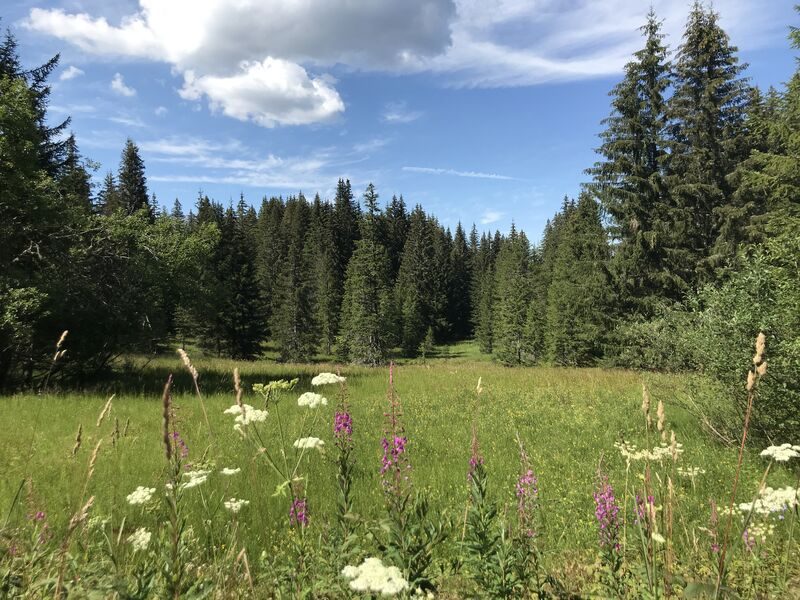
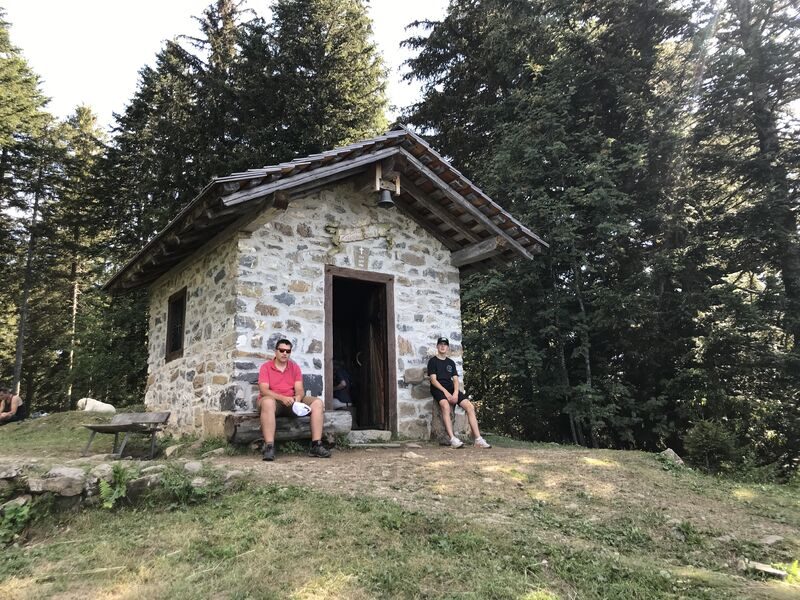
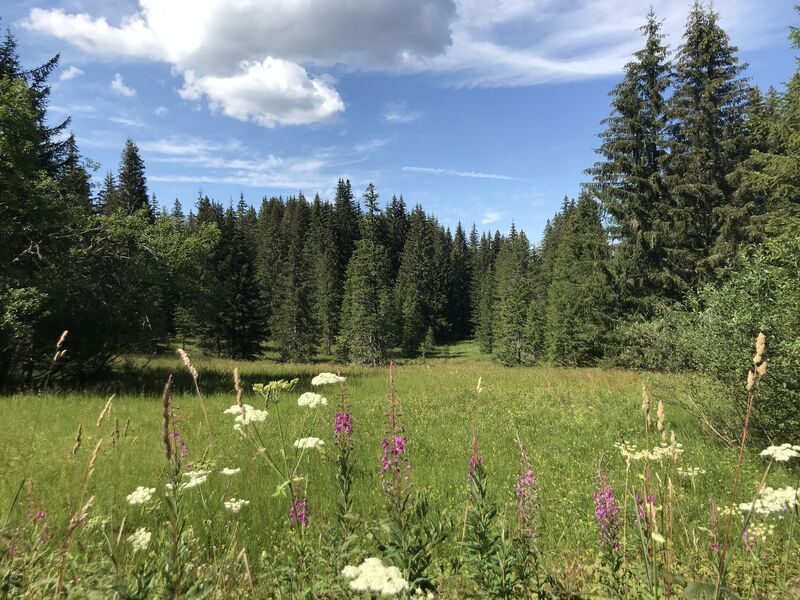
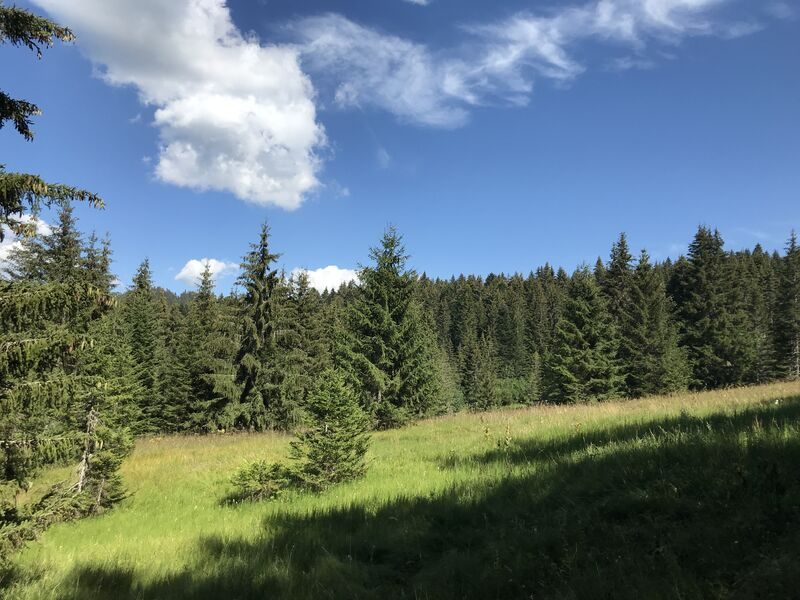
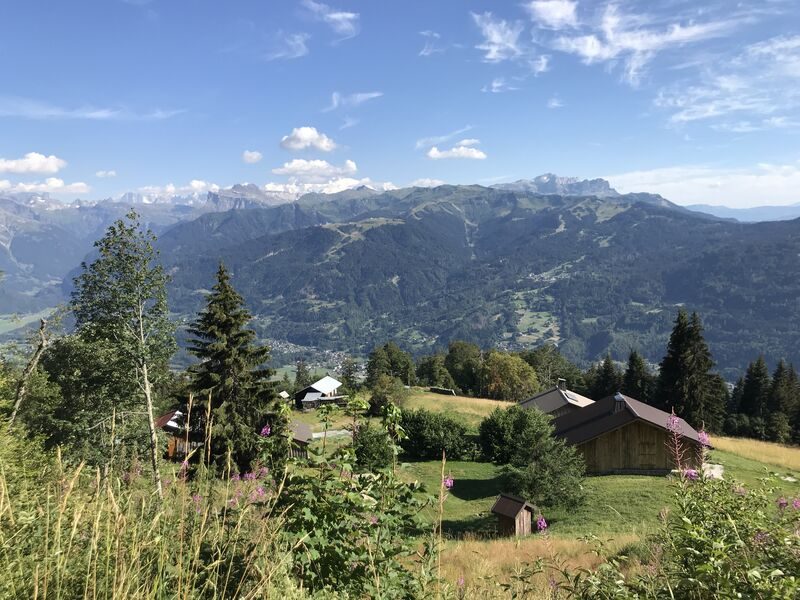
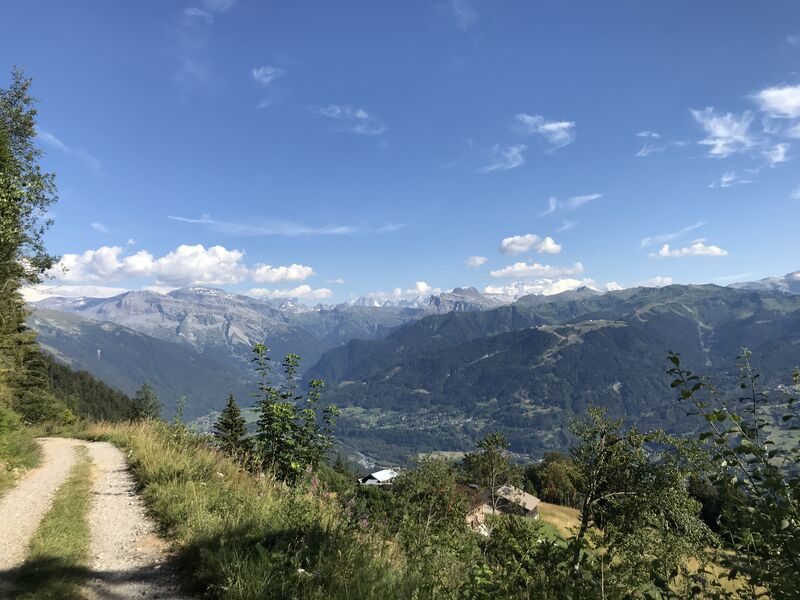


The Loëx Plateau is a stunning natural landscape, both in terms of its scenery and its biodiversity.
Description
As a result, it preserves remarkable types of natural habitats: Molinia meadows and associated communities, raised bogs, alkaline fens, and transitional ecosystems...
This limestone plateau is located in the upper montane zone (average elevation of 1,350 m), in the Haute-Savoie department, spanning three municipalities: Taninges, Les Gets, and Verchaix.
Deposits of clayey glacial alluvium have formed alkaline fens. Heavy precipitation has caused certain areas to evolve into domed peatlands. The forested area is dominated by spruce (spruce-fir forest or subalpine spruce forest, depending on the elevation).
The Loëx Plateau also constitutes a karst aquifer of great importance for current and future water needs.
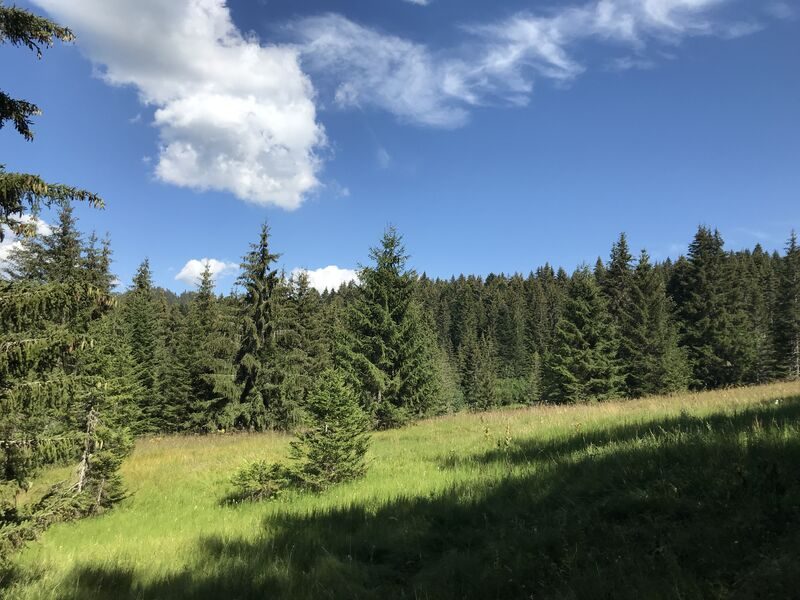
The vegetation is dominated by spruce-dominated woodlands with few broadleaf trees; while fir remains present below 1,400 meters in elevation, the subalpine spruce forest reigns supreme above that altitude. These forests are interspersed with broad meadows now threatened by abandonment.
On the southern edge of the plateau, the limestone ridges reach an elevation of 1,660 m. The average annual temperature (which does not exceed 5°C) and the short growing season (4 to 5 months at most) determine the presence of a sparse spruce forest on acidic soil rich in blueberries.
In contrast, on the steep slopes facing south, east, and west, a more productive beech-fir forest (where spruce is nevertheless present) thrives on deep schist substrate.
The Loëx Plateau boasts a very high level of biodiversity, linked in particular to the abundance of peatlands and the wide variety of habitats, alternating between forests, meadows, and open areas.
This site is home to 14 habitats of Community interest, including three priority habitats: Nard grasslands (6230*), active raised bogs (7110*), and wooded bogs (91D0*).
Several beautiful clusters of active raised bogs are found on the plateau: Les Bounnaz, La Biolle,
the bog west of Le Coutard, the bog north of Les Miches, the Joux d’Amont bog, Les Goyers, Lairon,
and Molliex Ouest.
Among the species of Community interest present on the site are three butterfly species: the Great Blue (Phengaris teleius), the Marsh Blue (Phengaris nausithous), and the Marsh Fritillary (Euphydrias aurinia). On the Loëx Plateau, the Succisa Checker has been observed in the Prizes sector but may also occur in other sectors. The Marsh Blue and the Great Burnet Blue have been observed in the Rosière sector, but may also be present in the Mais sector (where Great Burnet, Sanguisorba officinalis, grows).
About ten species of bats have been recorded at the site, including two of Community interest: the Barbastelle and Schreibers’ Pipistrelle.
As for the wetlands—which are abundant and particularly diverse—the following habitats are present: molinia grasslands, sphagnum and bladderwort peat bog pools, spruce-forested peat bogs, and various types of sedge-dominated “low marshes.”
But certain types of forest habitats are just as remarkable, such as spruce forests with lingonberries and subalpine spruce forests with sphagnum mosses.
In terms of flora, more than 400 plant species have been recorded, including more than 40 notable species in the peatlands and heathlands alone, some of which are protected by law. The only plant species of Community interest is the green Buxbaumia, a moss that grows on dead wood, primarily from conifers and, more rarely, from deciduous trees.
Of the five species of clubmosses found in France, the Loëx Plateau is home to four, including the rare Alpine clubmoss.
In terms of fauna, particularly invertebrates, surveys to date have revealed the presence of 20 species of odonates, 25 of lepidoptera, and 6 of orthoptera (grasshoppers). Notably, numerous species of odonates specific to peatlands have been observed, including the two-toothed Cordulégaster.
Rates
Free access.
Opening period
All year round daily.
Language spoken
-
 French
Location
- This field is for validation purposes and should be left unchanged.
Pour plus d'informations sur le traitement des données personnelles, cliquez ici.